
Single Origin Coffees
From single estates, these outstanding coffees are chosen for their remarkable, classic taste and richness. Coffees are listed by roast degree - light/medium to medium/dark, ending with Full City.
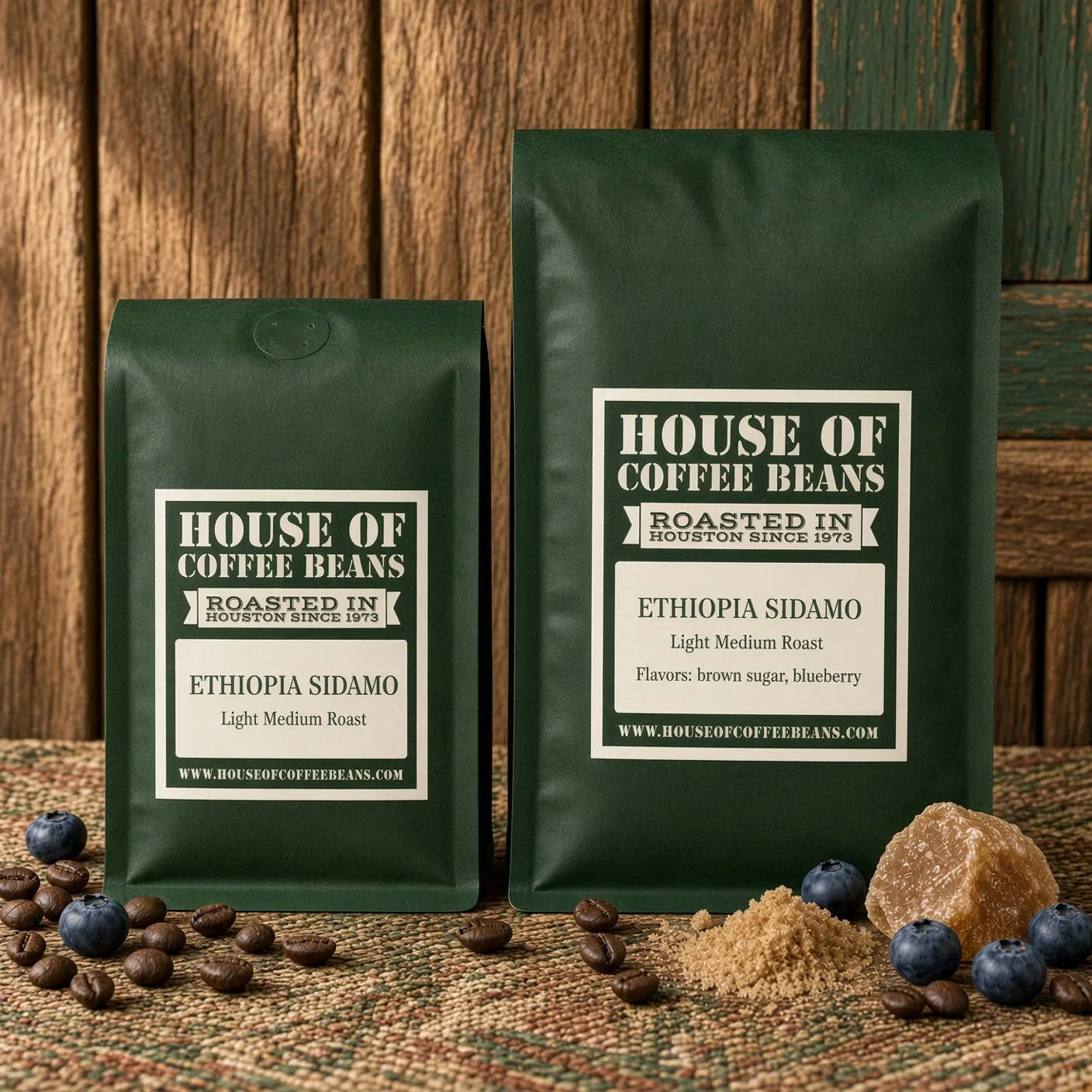
LIGHT-MEDIUM ROAST
Cupping Notes: Rich and balanced with sweet brown sugar flavor punctuated by nice blueberry characteristics
Acidity: Winey and sweet
Body: Medium body, smooth
Region: Southern Ethiopia
Process: Washed
Varietal: Landrace
Altitude: 1,600 - 1,900 masl
Sidamo is south of Addis Ababa and shares a border with Guji. Until very recently, Sidamo was a sub-region of Guji but was formed into its administrative state in 2020. Sidamo is the largest coffee-growing region in Ethiopia and is well-known throughout the world for the quality of its coffee.
Coffee originated in Ethiopia and grows wildly in the coffee-growing regions there. Unlike in other coffee-growing countries, which have one or very few coffee varieties on a farm, it is far more varied in Ethiopia. Therefore, most coffee labels say “heirloom varieties.” Ethiopian coffee farms are generally extremely small, the vast majority less than 3.5 hectares, and thus do not produce immense quantities of coffee. So, they band together into cooperatives or other groups and operate washing stations.
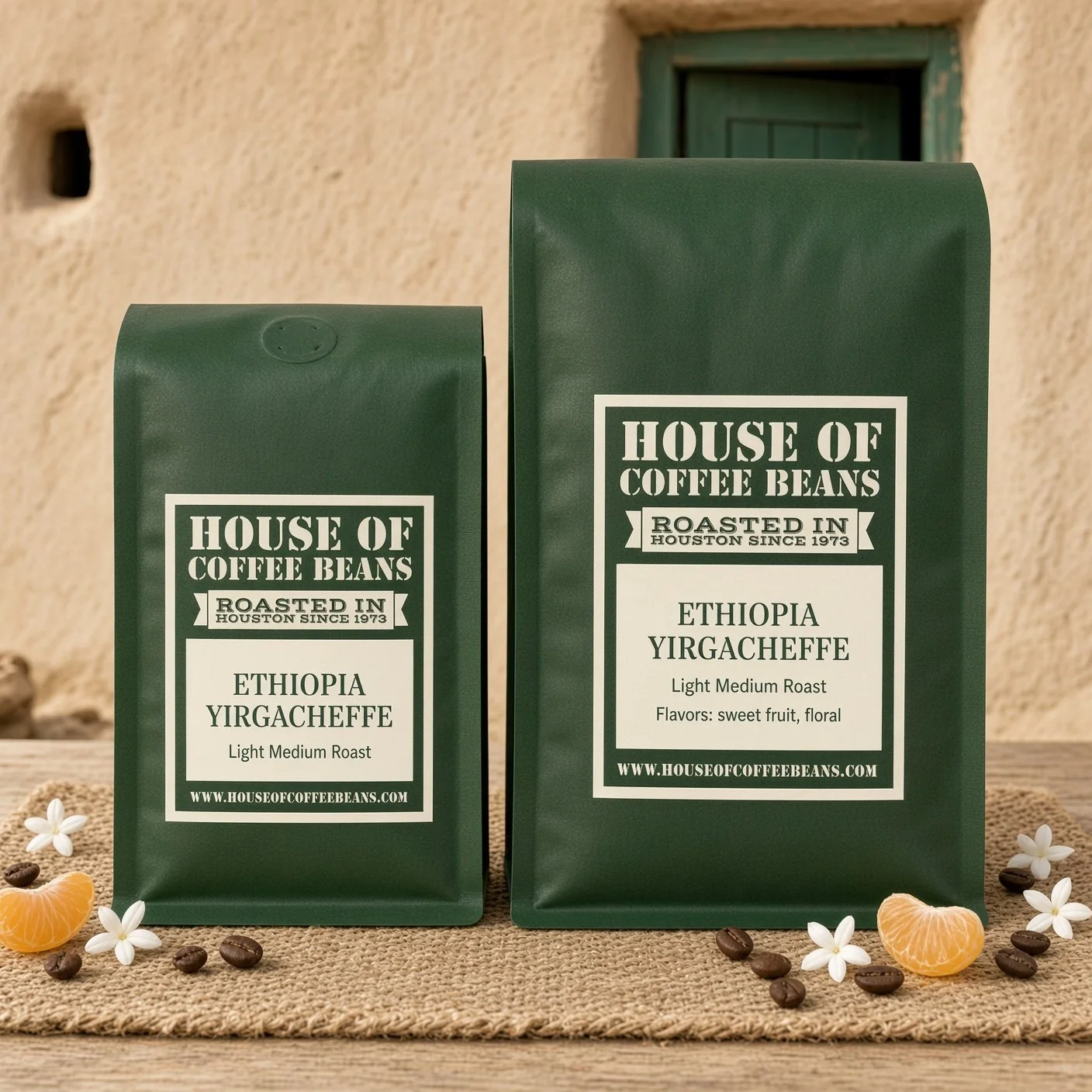
LIGHT-MEDIUM ROAST
Medium Body, Citric acidity
TASTING NOTES: Sweet, balanced fruit tones, Floral aftertaste
ALTITUDE: 900 ‐ 1500 meters
HARVEST: October ‐ February
SOIL TYPE: Volcanic loam
REGION: Gedeo Zone
VARIETIES: Bourbon, Arabica
COFFEE PROCESSING: Wet
DRYING: Bed drying
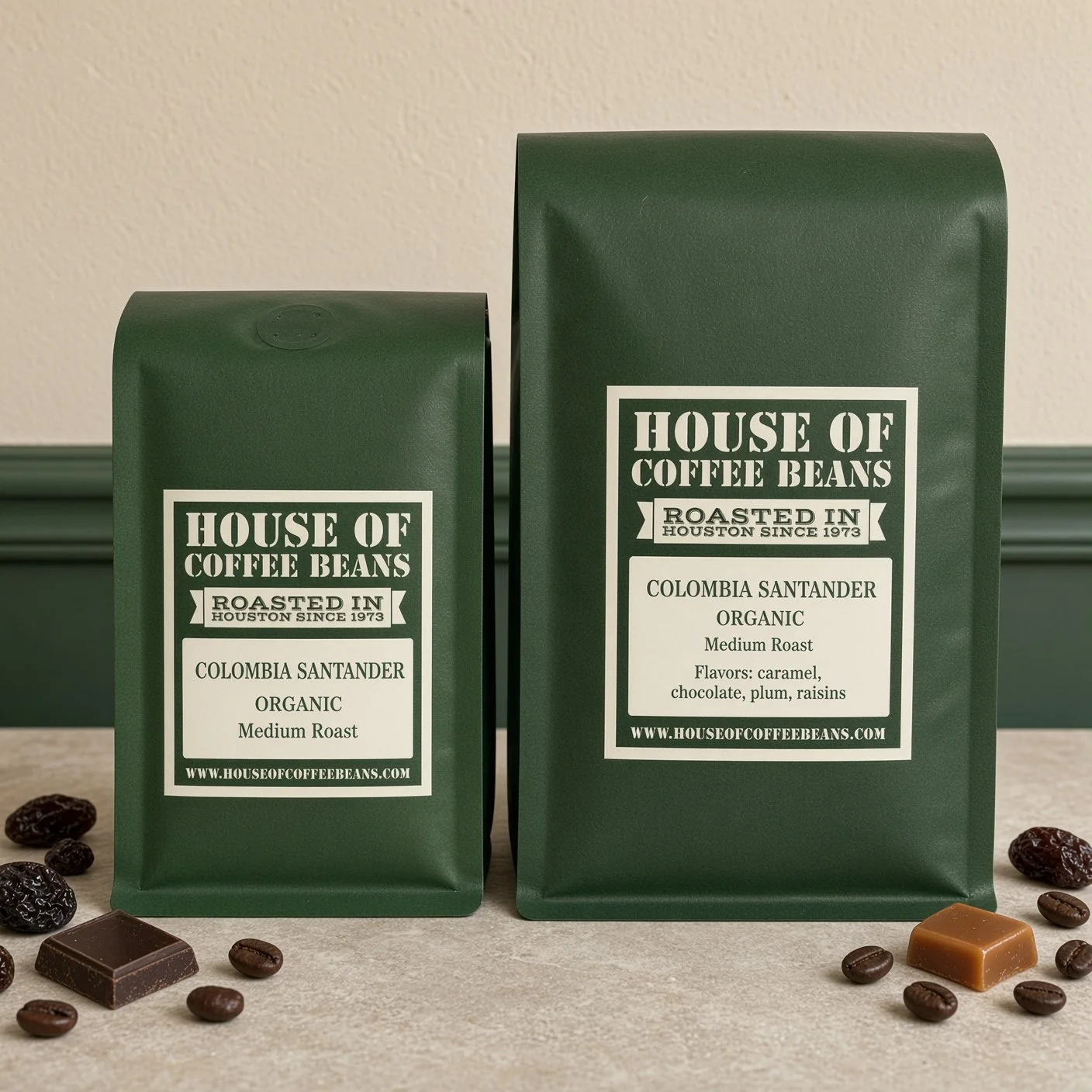
MEDIUM ROAST
TASTING NOTES
Aroma: Intense
Flavor: Sweet, caramel, chocolate, plum, raisins
Aftertaste: Lingering, rich, chocolaty
Acidity: Delicate
Body: Full, rich, creamy
This coffee grower association is comprised of 120 coffee growers and their families who are dedicated to the production of organic coffee and are also certified by Rain Forest Alliance. Located in the northern department of Santander which is blessed with lush natural forest, abundant water resources and mineral rich soil. The average farm size is about 25 acres and each farm runs its own micro wet mill and drying facilities, assuring top quality control from cherry to parchment. Colombian coffees are very well balanced and are produced throughout the year making them a good choice as a stand-alone varietal to a base component in the majority of blends and roast profiles.

MEDIUM ROAST
Cupping: Stone fruit, honey, lemongrass, chamomile; Clean, balanced & sweet with a light floral character
Acidity: Bright, vibrant
Body: Light, smooth
Region: West / Central Valley
Process: Washed
Altitude: 1,400 - 1,600 masl
Varietal: Caturra & Catuai
This coffee is processed at Beneficio La Eva in Sarchi. Cherry from select producer clients is collected at La Eva’s buying stations located throughout the Western and Central Valley regions and transported to La Eva for wet processing. Individual producer or buying station lots are separated for wet processing to maintain their individual characteristics, then later blended to produce “Las Trojas Superior” unique flavor profile. The parchment is later milled at the same facility prior to shipment ensuring quality control throughout the supply chain.
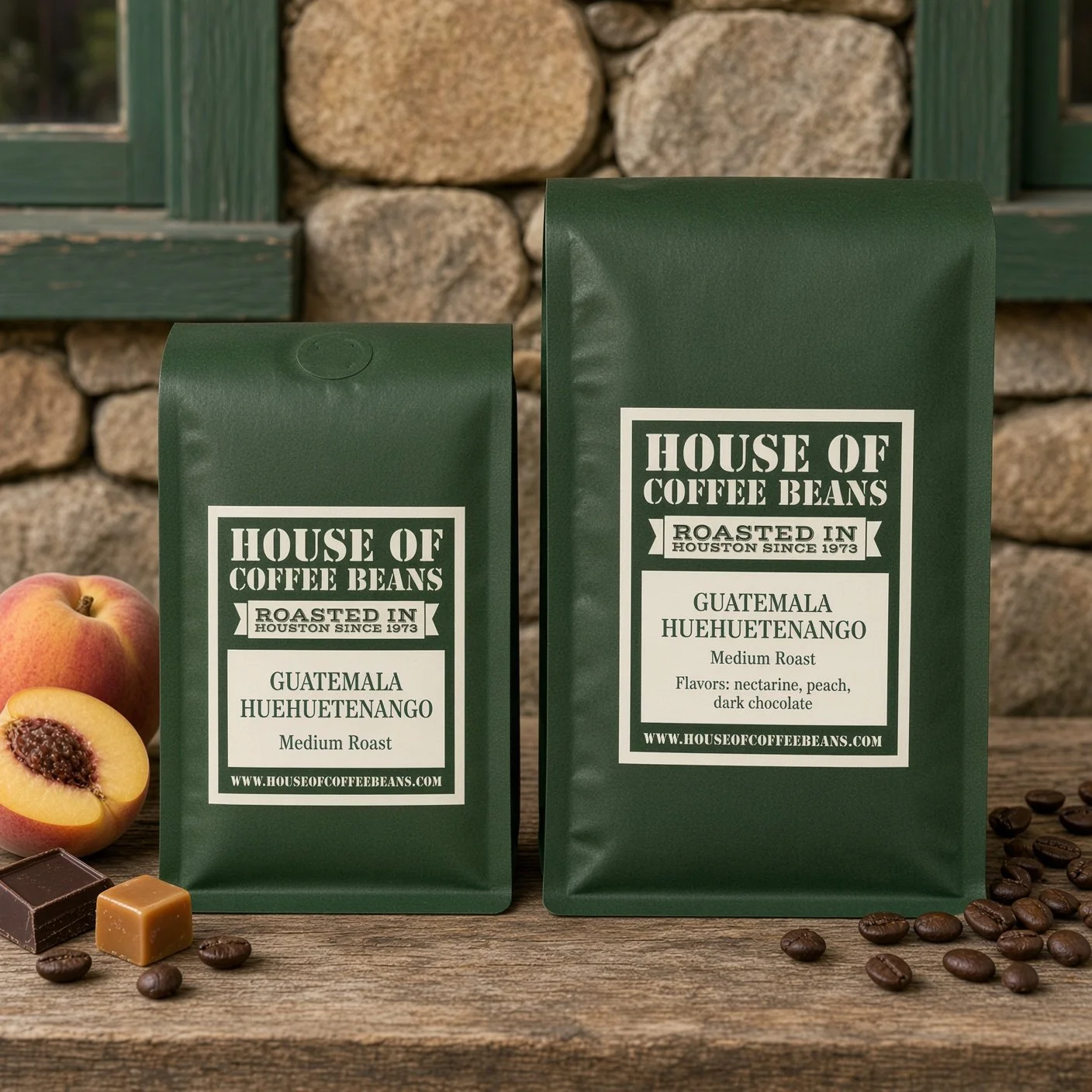
MEDIUM ROAST
AROMA: Chocolate, caramel
FLAVOR: Nectarine, peaches, hints of dark chocolate
AFTERTASTE: Rich, winey
ACIDITY: Vibrant, tangy
BODY: Full, rich, smooth
Huehuetenango is the highest and driest of the three non-volcanic coffee regions under cultivation. Thanks to the dry, hot winds that blow into the mountains from Mexico's Tehauntepec plain, the region is protected from frost, allowing Highland Huehue to be cultivated up to 6,500 feet (2,000 meters). The extreme remoteness of Huehuetenango requires all producers to process their own coffee. Fortunately, the region has an almost infinite number of rivers and streams, so a mill can be placed almost anywhere. Zaculeu, named after the pre-Colombian Mayan archeological site
in Huehuetenango, is a blend of fine coffee sourced from a select group of small producers. This coffee is one of the most intensely flavored and fragrant coffees in all of Latin America.
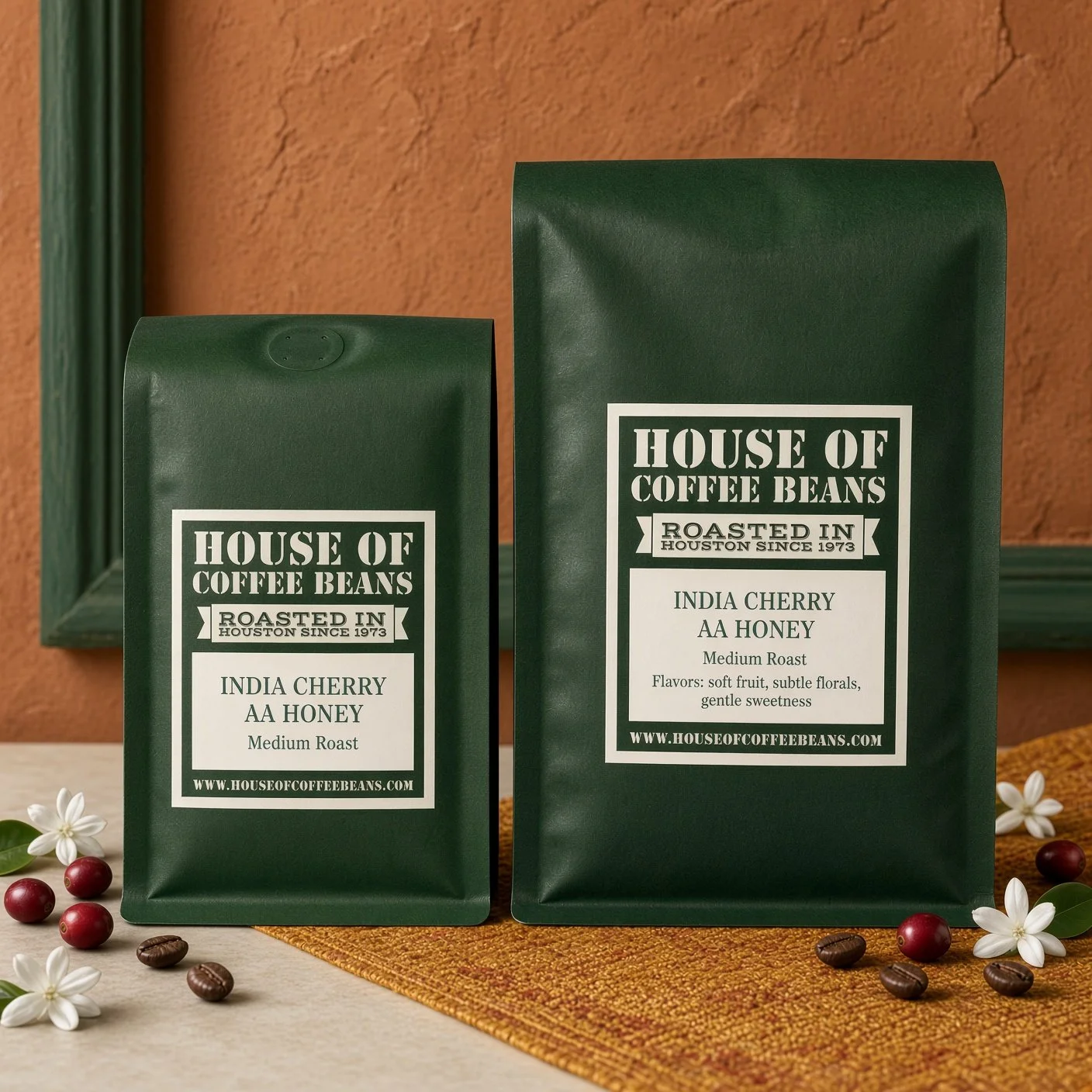
MEDIUM ROAST
Cherry AA is a premium-grade naturally processed Indian Arabica, sourced from the fertile highlands of Southern India. Produced from fully ripe, hand-picked cherries and sun-dried in the cherry, this coffee delivers excellent bean uniformity, refined sweetness, and aromatic clarity. The AA grading ensures larger bean size, consistent roasting performance, and superior cup balance.
Fragrance / Aroma: Floral, lightly fruity
Flavor Notes: Soft fruit, gentle sweetness, subtle florals
Acidity: Balanced
Body: Medium, smooth
Processing: Natural / sun-dried
Origin: Southern India
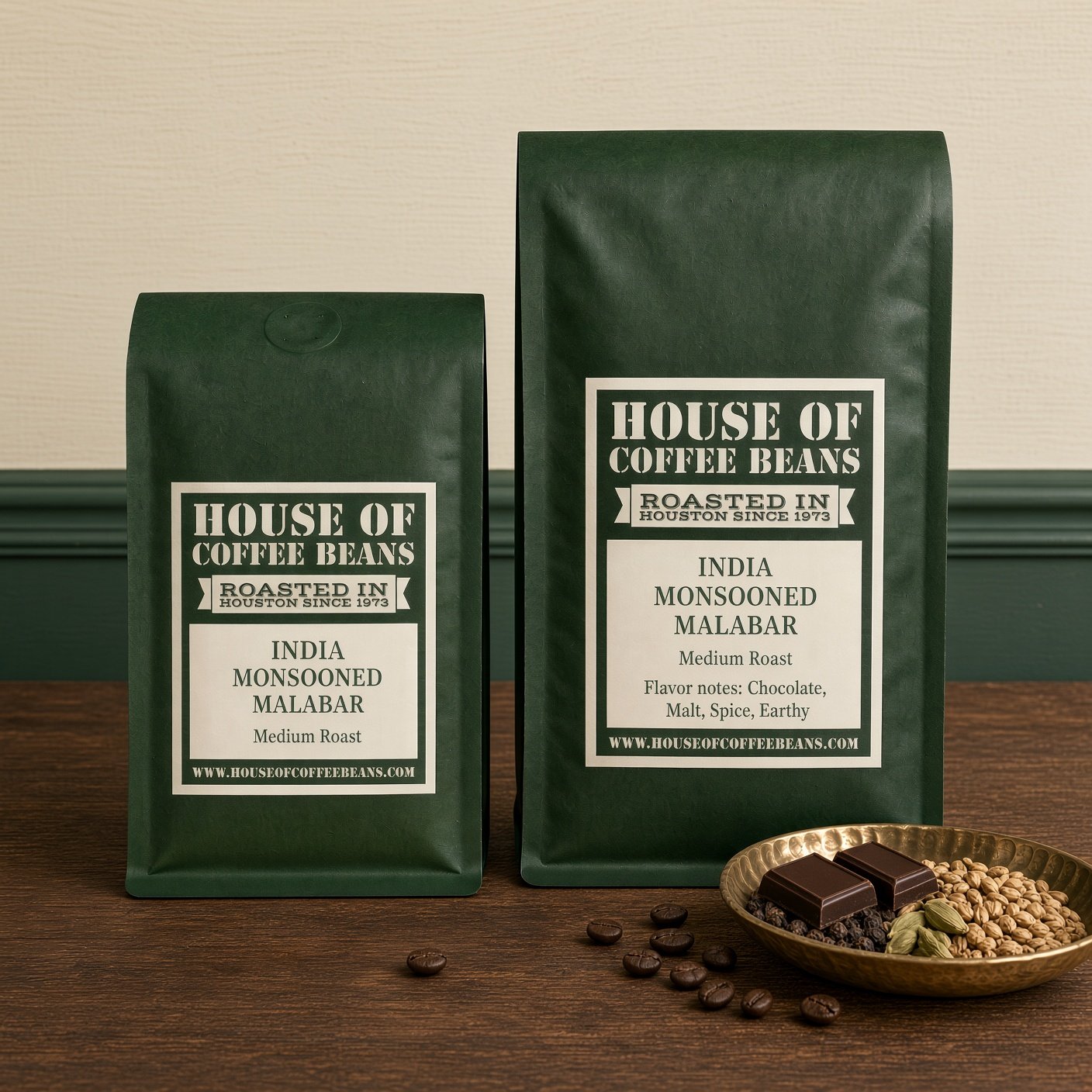
MEDIUM ROAST
Flavor notes: Chocolate, Malt, Spice, Earthy
The Indian Monsooned Malabar is a very unique and exotic coffee. This exceptional coffee is dried in a way that virtually eliminates any acid. Highly recommended for coffee lovers who sometimes experience stomach upset from coffee acidity!
Monsoon Malabar coffee is prepared from Arabica cherries (“cherry” refers to dry-processed coffees in India). After grading, the coffee is transported to the coastal city of Mangalore where the “monsooning” is carried out in large open-walled warehouses.
During the rainy months of June through August, the coffee is spread inside the warehouses with very good aeration and ventilation at a particular thickness so that the coffee slowly absorbs moisture. After it absorbs sufficient moisture and bloats in size, it has to be periodically bulked and bagged and stacked so as to ensure proper and uniform “monsooning.” This process has to be carried out many times during the months of the monsoon.
After September, when the rains subside and the temperatures are higher, the ghostly white and swollen beans are sent through the final grading (gravity tables and hand-sorting) in order to obtain the Malabar export quality. The farmers not only produce coffee, they also grow pepper, cardamom, and oranges. Most of the farms are 80 to 100 years old and belong to third generation growers.
ALTITUDE: 1,000 - 1,500 meters
HARVEST: June - September
SOIL TYPE: Red clay
REGION: Malabar Coast, Karnataka & Kerala
VARIETIES: Kent, Catimor, S.795
COFFEE PROCESSING: Washed
DRYING: Monsooned
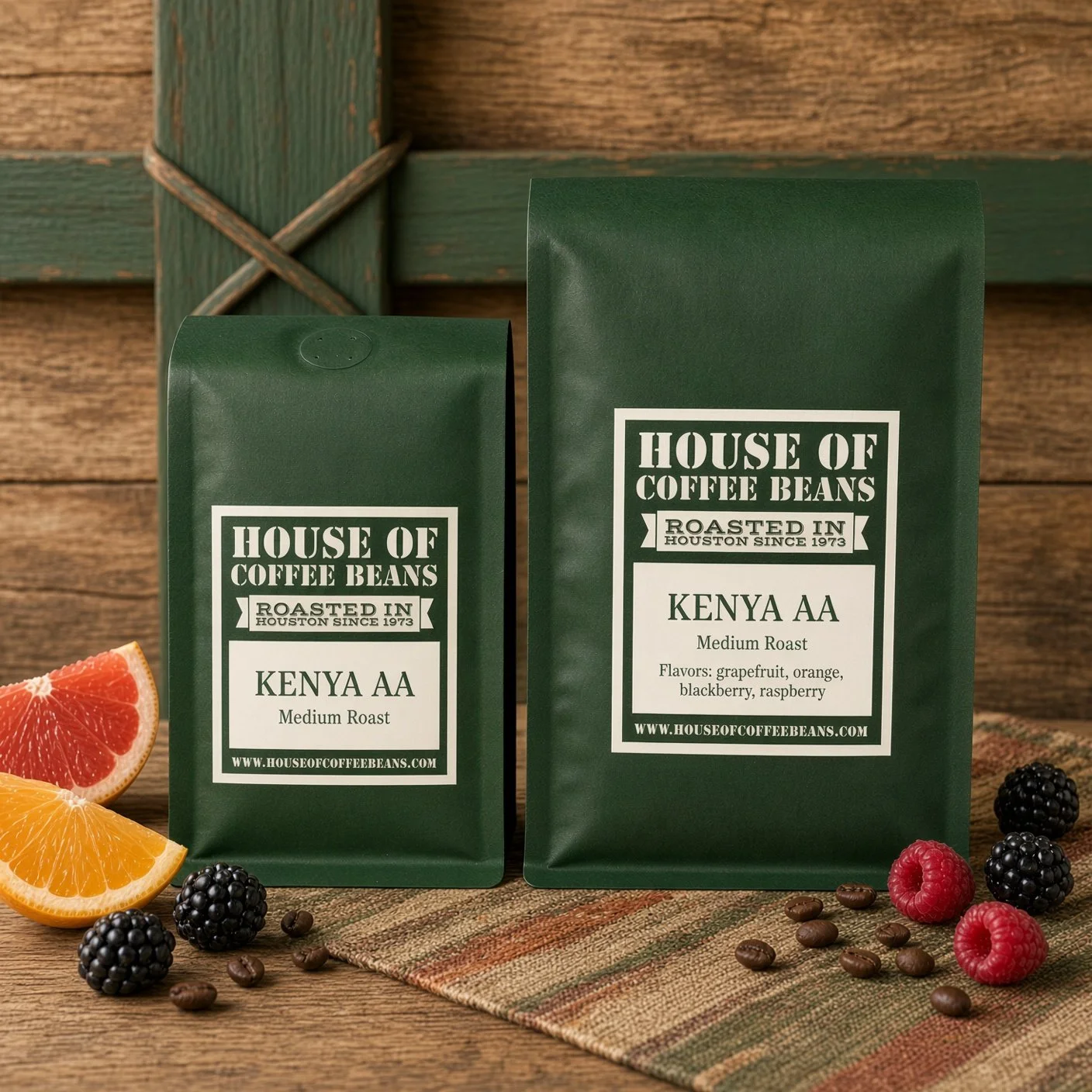
MEDIUM ROAST
AROMA: Bright chocolate, floral, citrus
FLAVOR: Grapefruit, orange, blackberry, raspberry, honey
AFTERTASTE: Lingering, winey
ACIDITY: Bright, tangy
BODY: Smooth, juicy, syrupy, silky
Kenya is situated along the East African Coast and the equator. The country is surrounded by Tanzania, Uganda, Ethiopia and Somalia. Arabica was introduced by French Missionaries in about 1894. The first commercial plantations were established around 1908. Kenyan Coffee is celebrated as one of the top bold and distinctive flavor profiles in the coffee world. AA Plus refers to screen size 18 up and top cup quality. It is a fully washed coffee with a specialty coffee association {SCA} score ranging from 85-90. Most of the top producing areas are found around the second tallest mountain in Africa, Mt. Kenya which stands at 5,199 meters. The rich volcanic soils coupled with an annual rainfall of around 1,000-1,200mm makes the ideal climate to develop the top aroma and flavor notes. Each county has small farms who generally band together to form local grower associations and/or cooperatives as well as larger estates giving the country a diverse production base. Walker Coffee has strong historical family ties to Kenya which gives them unique access to the very best coffees available in the country.
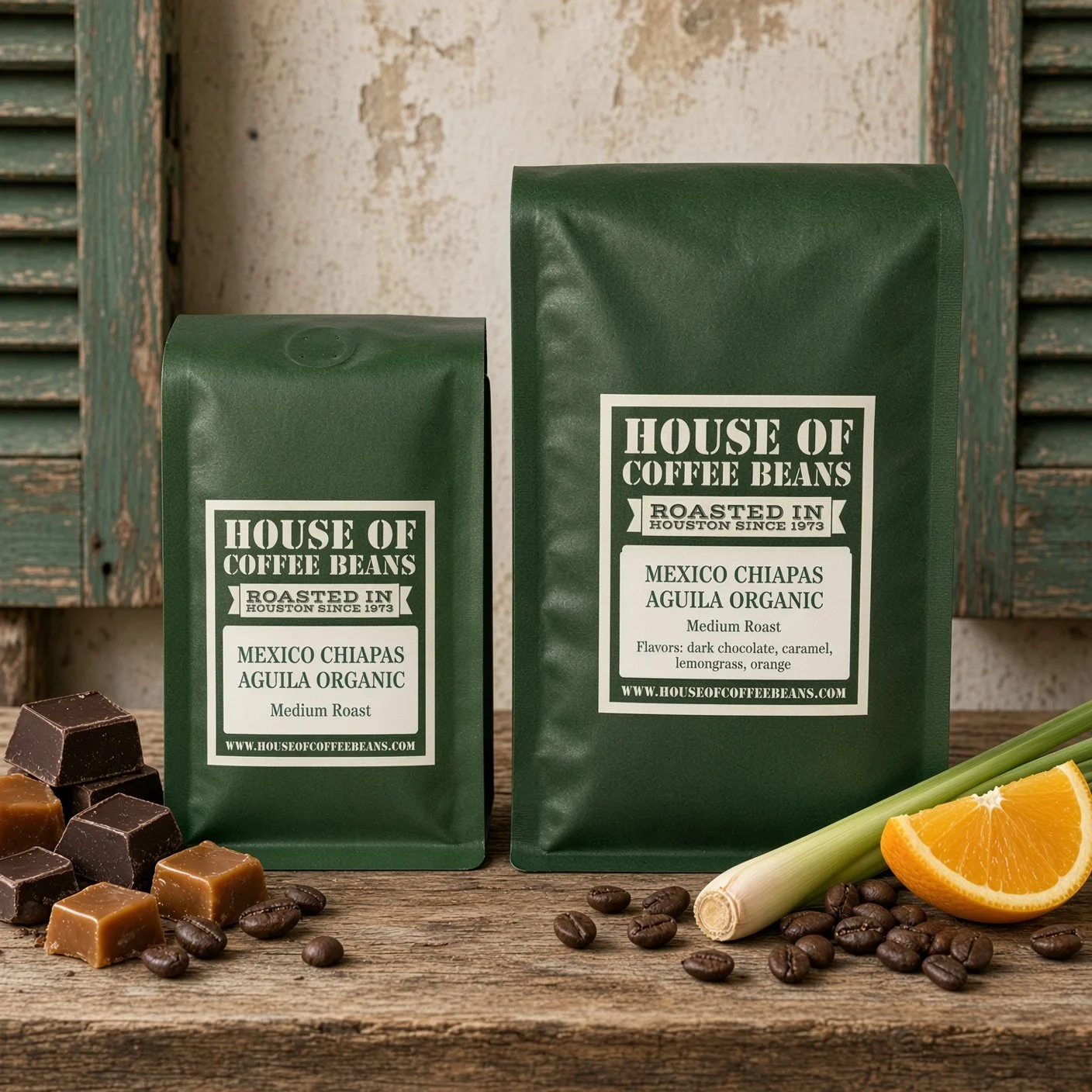
MEDIUM ROAST
AROMA: Nutmeg, jasmine
FLAVOR: Dark chocolate, caramel, lemon grass, oranges
AFTERTASTE: Floral, lingering
ACIDITY: Citrus, vibrant
BODY: Full, juicy, creamy
Chiapas is the southernmost region in Mexico, sharing a border with Guatemala to the west, and Oaxaca to the east. These organic coffees are produced mainly in the highlands of Motozintla & Soconusco area and are sourced exclusively from farmers who belong to well established cooperatives and whom are certified by OCIA (USA) & IMO/Naturland (Germany) among others. The mountainous highlands of Chiapas provide an ideal climate in terms of temperature and humidity for arabica cultivation; it’s also home to some breathtaking vistas and numerous ancient Mayan archeological sites. Coffee in this region is cultivated by smallholders, often descendants of the indigenous tribes who plant, harvest and prepare the coffee themselves a by hand, sparing no effort to obtain a product which makes them proud.
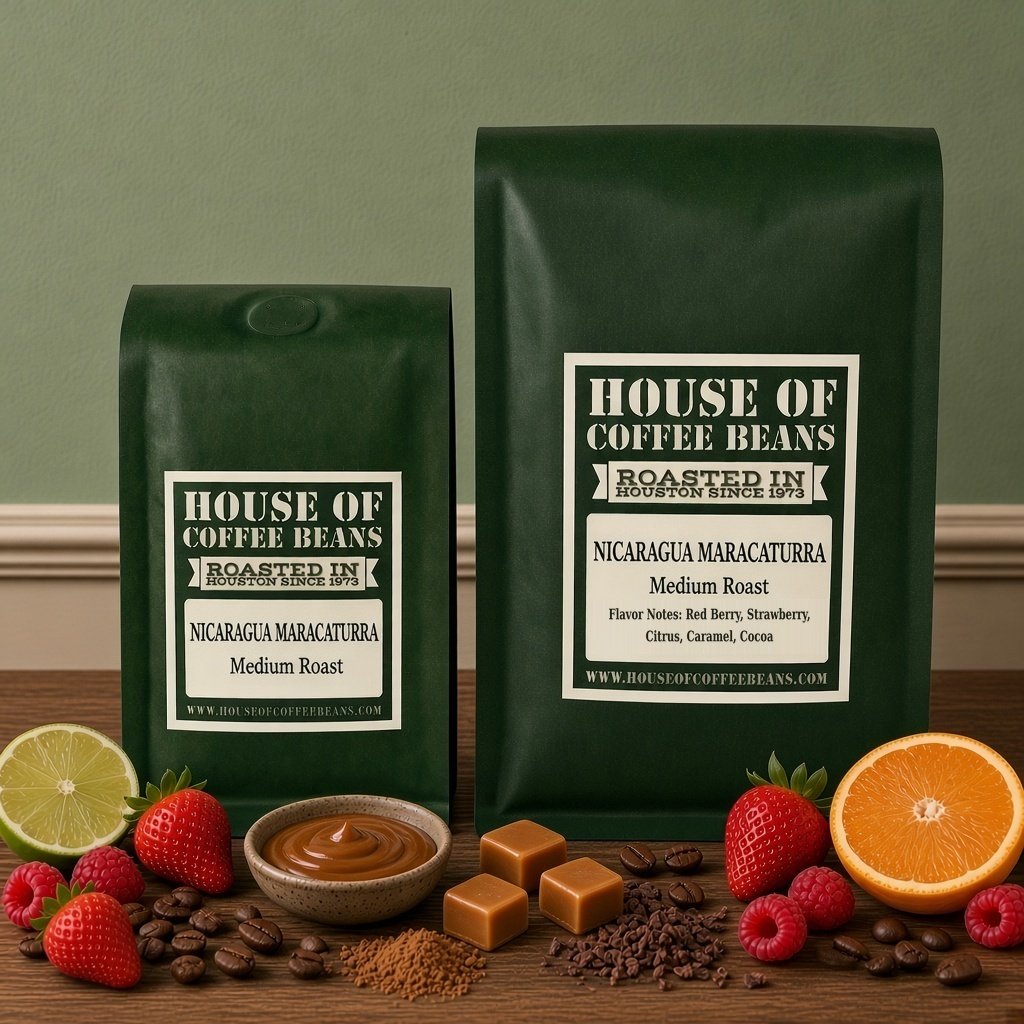
Medium Roast | Washed
Origin: Nicaragua, Jinotega, Finca Santa Matilde (1,100 meters)
Varietal: Maracaturra
Flavor notes: Red Berry, Ripe Strawberry, Cherry, Citrus, Stone Fruit, Caramel, Cocoa
This microlot comes from Finca Santa Matilde, high in the mountains of Jinotega. Salvador Mayorga and Dorisabel Conrado founded the farm in 2022. Maracaturra is a natural hybrid of Maragogipe and Caturra, known for its large beans and expressive cup. It's complex and juicy, with floral aromatics, bright citrus acidity, red berry and ripe strawberry, and layers of caramel and cocoa over a heavy body.
A berry bonanza from the mountains of Nicaragua! Ripe strawberry and red berry leap from the cup of this rare Maracaturra microlot, grown at 1,100 meters on Finca Santa Matilde in Jinotega. Bright citrus and juicy cherry dance over a rich, heavy body, finishing with layers of caramel and cocoa. Big beans, big flavor, and a cup you won't forget. Get it before it's gone!
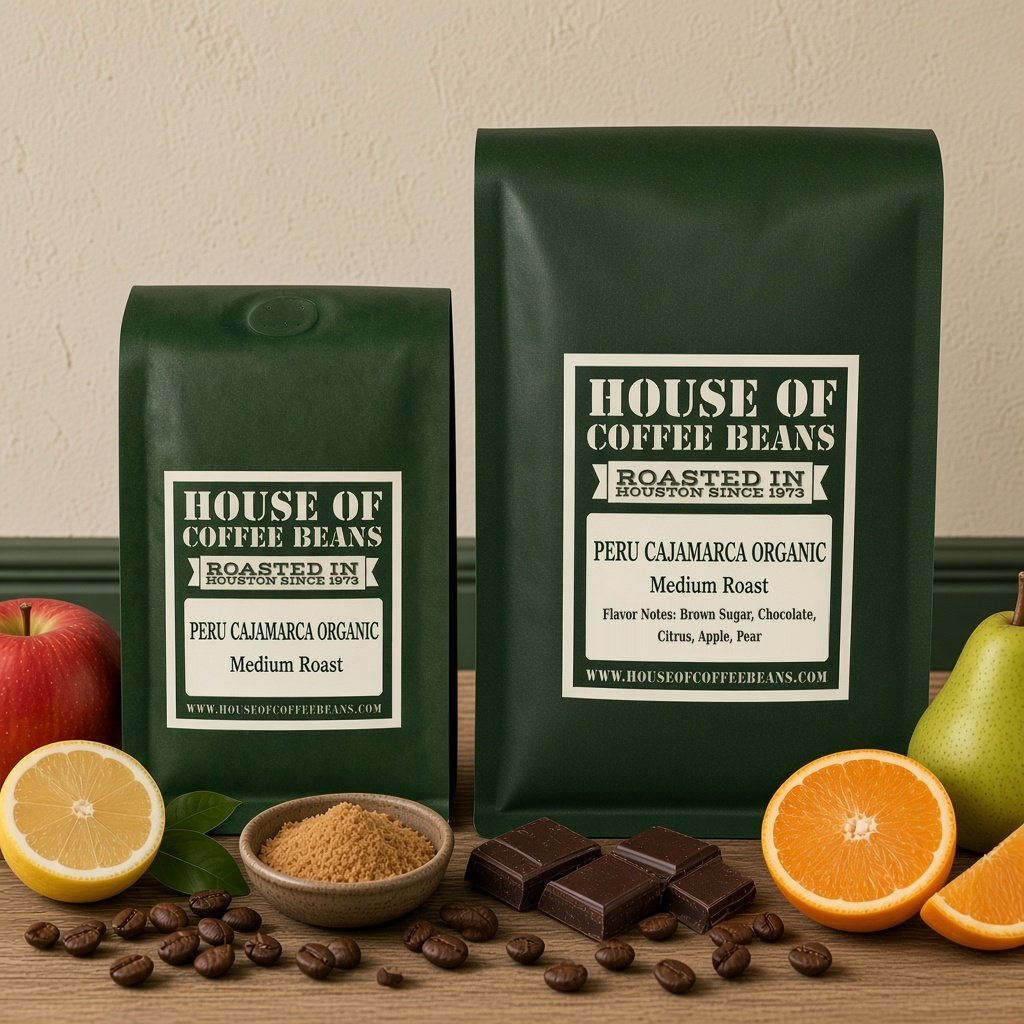
Medium Roast | Washed | Organic
Origin: Peru, Valle Chingama, Cajamarca (Jaén)
Flavor notes: Pear, Brown Sugar, Chocolate, Citrus, Apple, Raisin
From the Chingama valley in northern Peru comes this certified organic, strictly hard bean Grade 1 coffee from the 2026 harvest. It opens with a sweet brown sugar and chocolate aroma, followed by bright, lively acidity with lemon, lime and orange alongside apple, pear and raisin. Smooth medium body and a clean, sweet finish.
Juicy pear meets brown sugar in this stunning Peruvian find! Grown high in the Chingama valley of Cajamarca, this certified organic gem bursts with ripe, honeyed pear up front, then sparkles with lemon, lime and orange before settling into apple, raisin and a whisper of chocolate. It's bright, sweet and irresistibly smooth, with a clean finish that'll have you reaching for another cup. Grab it while it lasts!
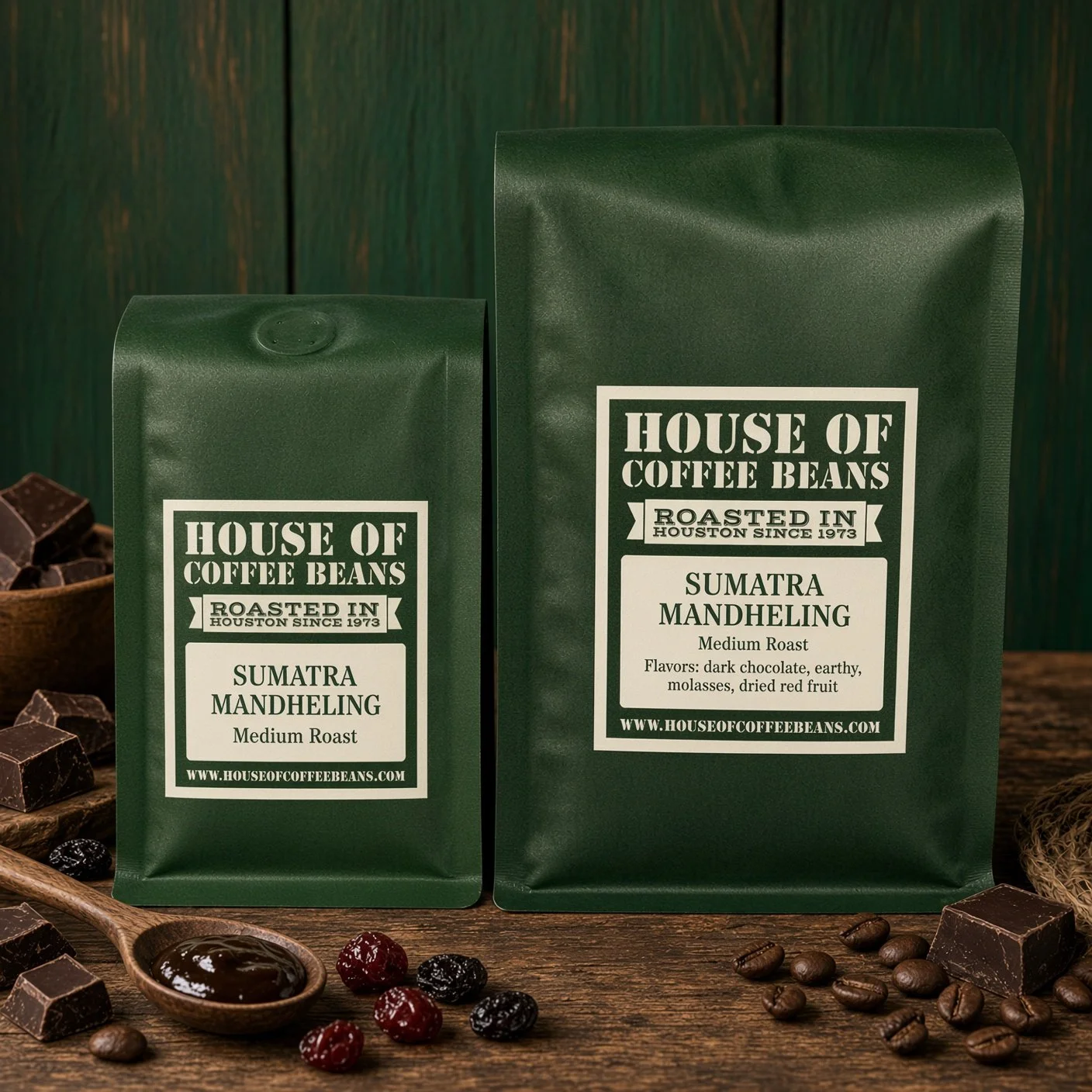
MEDIUM ROAST
AROMA: Chocolate, brown spice
FLAVOR: Dark chocolate, earthy, molasses, dried red fruit
AFTERTASTE: Lingering, rich, chocolaty
ACIDITY: Mild, winey
BODY: Rich, smooth, creamy
Sumatra is a distinctive area for Indonesian coffee production. A volcanic island with good elevation and fertile volcanic soil, two great characteristics for a successful cultivation. On this large island, the best arabica coffees come from the northern provinces of Aceh and North Sumatra around Lake Toba. Gayo coffee is sourced in the Aceh region from several small villages around the Central Gayo regency. The processing of Sumatran coffee (like in most of Indonesia) is very unique. Farmers in Sumatra process the coffee beans with what is called the wet hulling or “giling basah” method. As soon as the cherries are harvested, they are depulped using rustic local machines. The beans are then stored in bags or tanks for (dry) fermentation overnight. The next morning, farmers wash the remaining pulp from the beans and after a quick dry (to 35-40%) the coffee is brought to a hulling station to be hulled (ergo the wet hulled method). After hulling, beans are dried to 12% moisture. The wet-hulling process results in a more earthy and less acidic coffee. Together with its full body and some nice notes of fruits and berries, these are the distinctive features of Sumatran coffees.
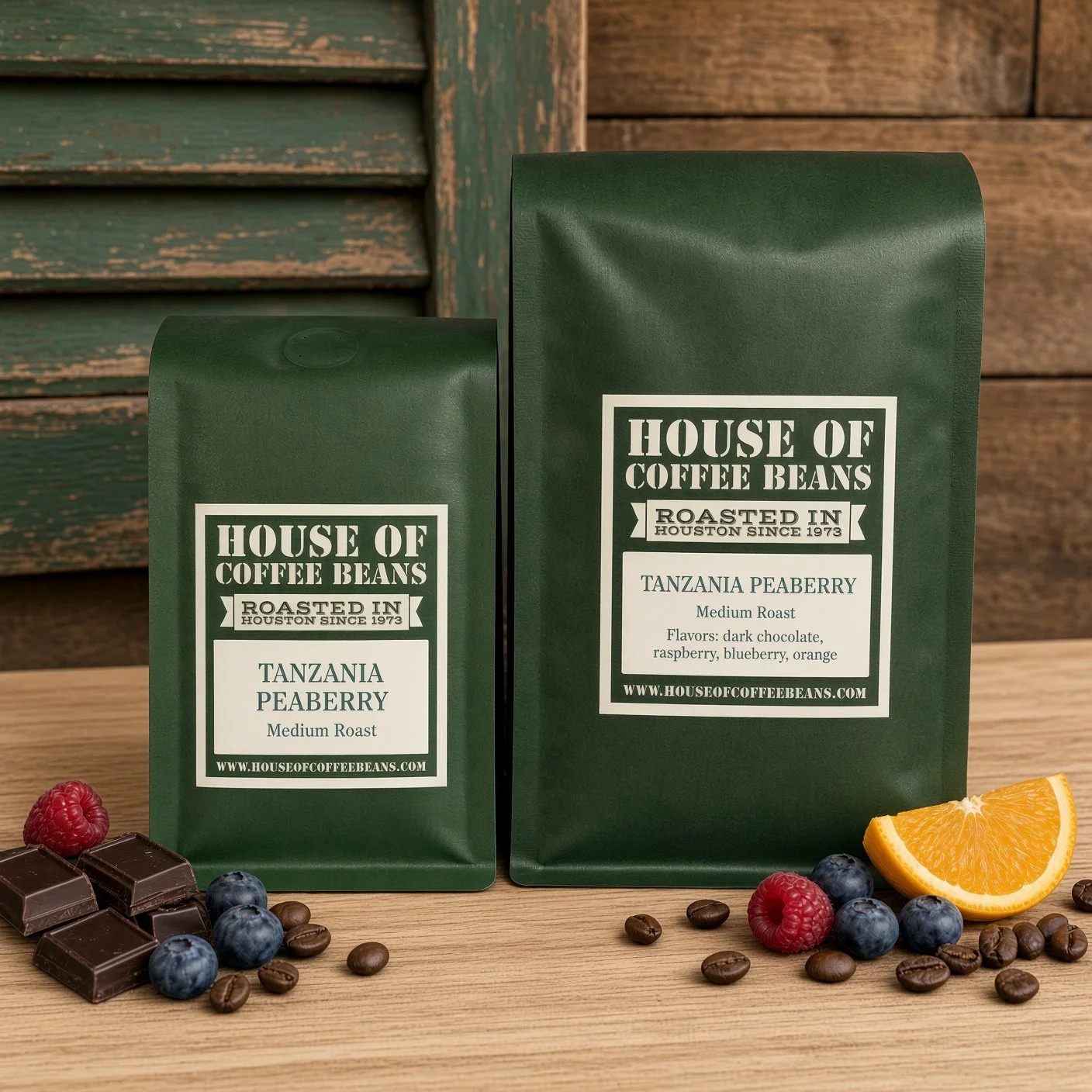
MEDIUM ROAST
Tasting Notes:
AROMA: Chocolate
FLAVOR: Dark chocolate, raspberry, blueberry, orange Lingering, fruity
AFTERTASTE: Lingering, fruity
ACIDITY: Bright, citric
BODY:Rich, smooth, juicy
GENERAL INFORMATION:
REGION: Kilimanjaro & Arusha
VARIETIES: Bourbon, N39, Kent, Comfact, Nyasa
ALTITUDE: 1,100 - 1,700 meters
SOIL TYPE: Volcanic Loam
HARVEST: May - December
COFFEE PROCESSING: Washed
DRYING: Sun/Patio
This coffee is a blend from various coffee producers from across the Kilimanjaro and Arusha regions. Some of the farmer groups where this coffee was sourced from include Usseri cooperative, Mrimbo Uuwo and Ukibi Farmers Group. These groups come from districts in Kilimanjaro such as Hai and Moshi Rural district, in addition the coffee was also sourced from Meru district close to the town of Arusha. The producers of this blend typically have farms between 1-2 hectares in size and intercrop with Banana’s and avocado. Many of the farms rely on organic means to fertilize their coffee, such as using animal manure and mulch from maize production. The coffee is fully washed and processed on the farms using locally made hand pulpers, buckets for fermentation and dried on mats or raised beds. Once the parchment has dried the farmers usually sell the parchment as and when they require money.
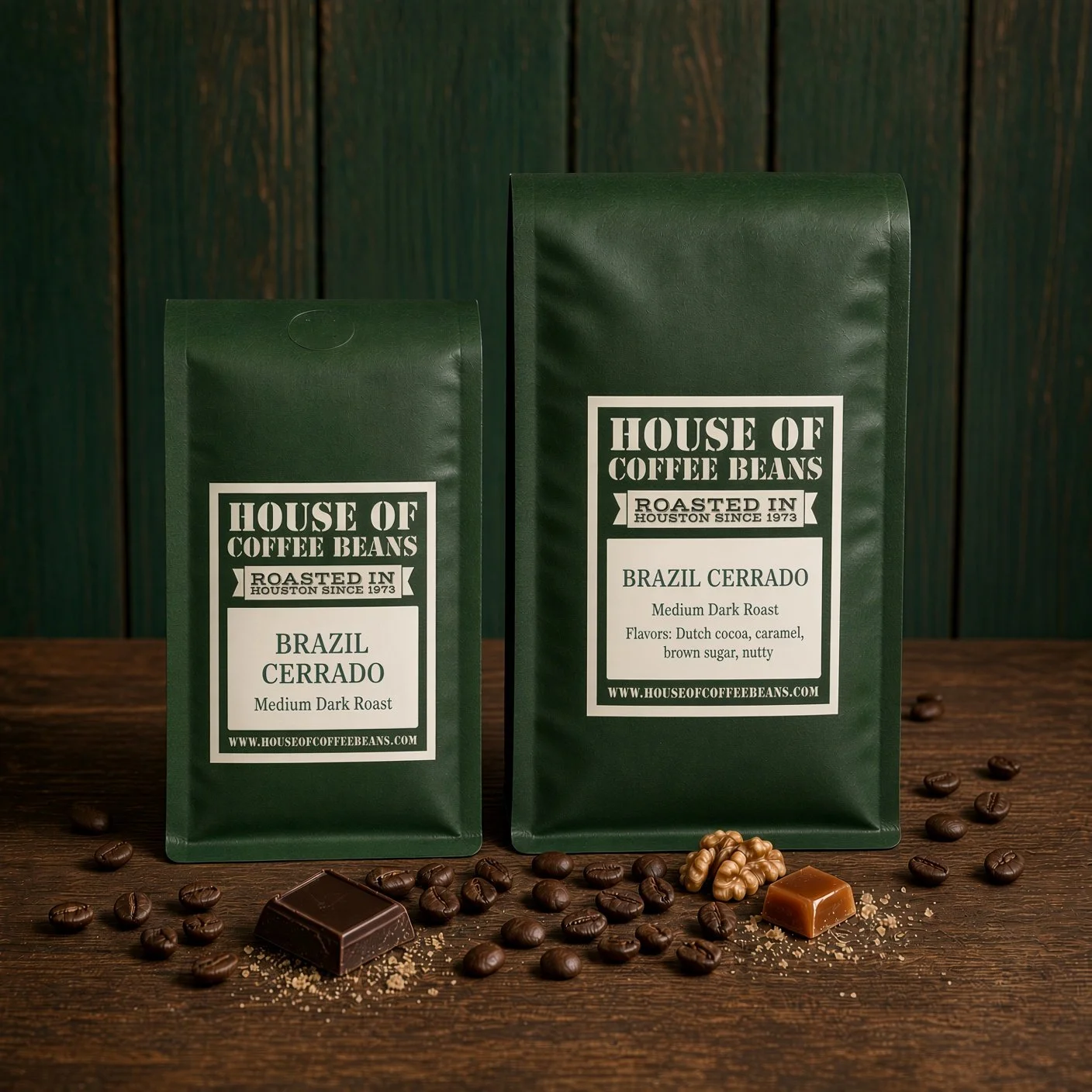
MEDIUM DARK ROAST
AROMA: Caramel, brown sugar, nutty
FLAVOR: Heavy body, Dutch cocoa, soft acidity, very balanced, cocoa finish
AFTERTASTE: Lingering, clean, sweet
ACIDITY: Mild
BODY: Smooth, creamy, rich
Region: Cerrado Mineiro, Minas Gerais
Process: Natural
Altitude: 1060 masl
Varietal: Yellow Catuai
Cerrado refers to a region in the west of Minas Gerais state. The coffee grown here flourishes in the hot, wet summers and cool, dry winters. The Cerrado Mineiro coffee region only began producing its tasteful beans as of 40 years ago, and the majority of the farms range from medium-sized hectares to larger plantations. Due to the vast majority of coffee producers in Cerrado Mineiro, the Brazilian Forest Code requires farmers to set aside 35% of their land for conservation. Brazilian coffees are a key component in a number of different blends, most notably espresso blends.
The Cerrado Mineiro region is the first “Designation of Origin” in Brazil, located in the northwest of the Minas Gerais state in central part of the country. The coffees under this Designation of Origin are “Origin and Quality Guaranteed” by the Cerrado Minerio Region – D.O. Regulatory Board, and each bag carries a QR code connecting it to the specific farm and farmer who produced the coffee. This adds an additional layer of traceability which is often difficult in the massive coffee growing regions of Brazil.
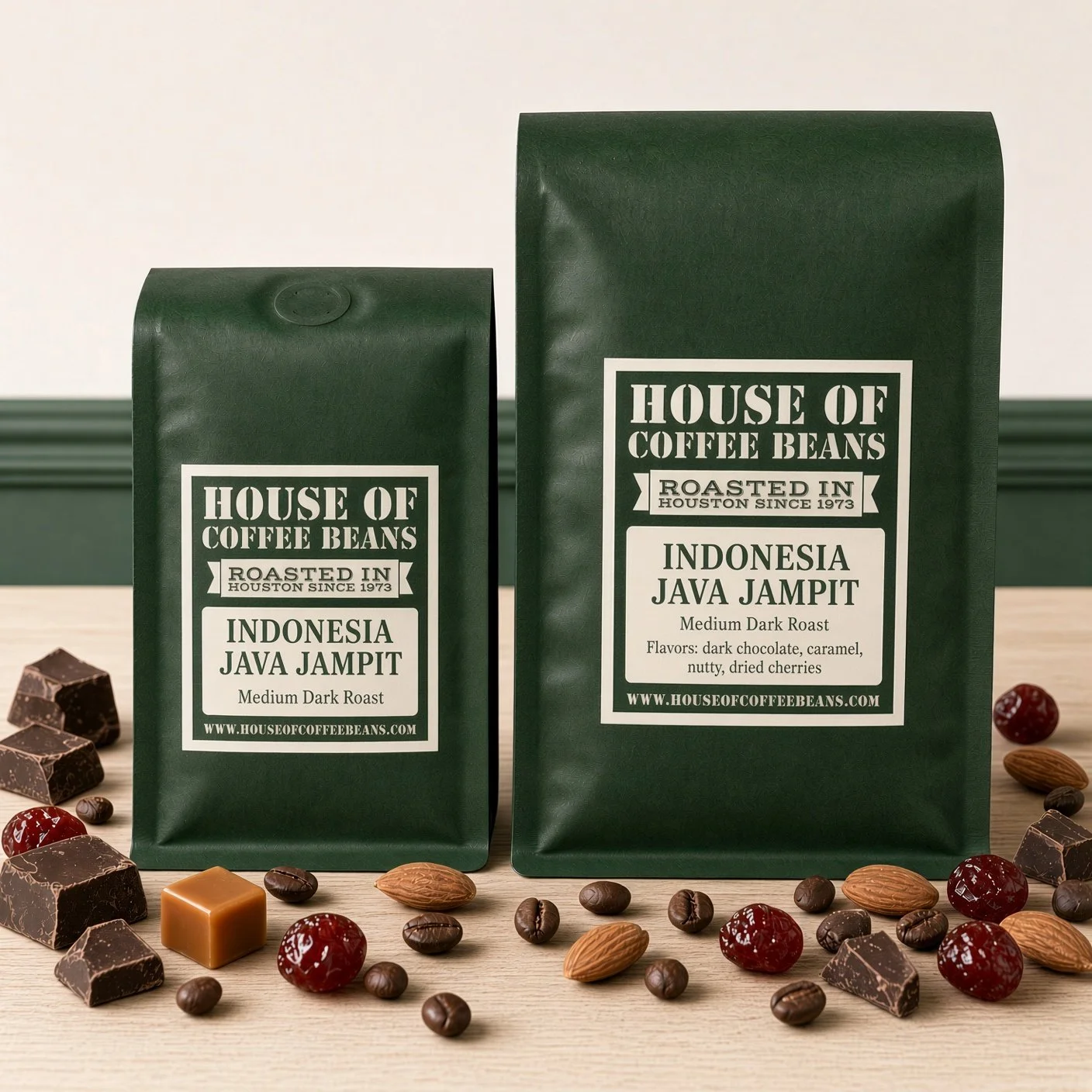
MEDIUM DARK ROAST
AROMA: Brown sugar, honey, cocoa, dark chocolate
FLAVOR: Dark chocolate, caramel, nutty, dried cherries
AFTERTASTE: Lingering, chocolaty
ACIDITY: Mild
BODY: Rich, creamy, silky
Java Est. Washed A/WP-1X PTP Est. Jampit is a premium Arabica coffee from Indonesia’s state-owned Jampit Estate (managed by PTP Nusantara) on East Java’s Ijen Plateau. Established by the Dutch in the 18th century, it’s grown at 3,500–5,000 feet in volcanic soil, with harvests from May to September.
This wet-processed (washed) coffee, graded WP-1X (wet-polished grade 1), features larger “bold” beans and a clean profile from 36-hour fermentation and sun-drying. It has low acidity, heavy body, and a smooth finish, with flavors of bittersweet chocolate, baking spices, nuts (e.g., almond), syrup, and occasional notes like root beer or black licorice.
It’s sweeter and cleaner than typical Indonesian coffees, with a juicy rich cup.
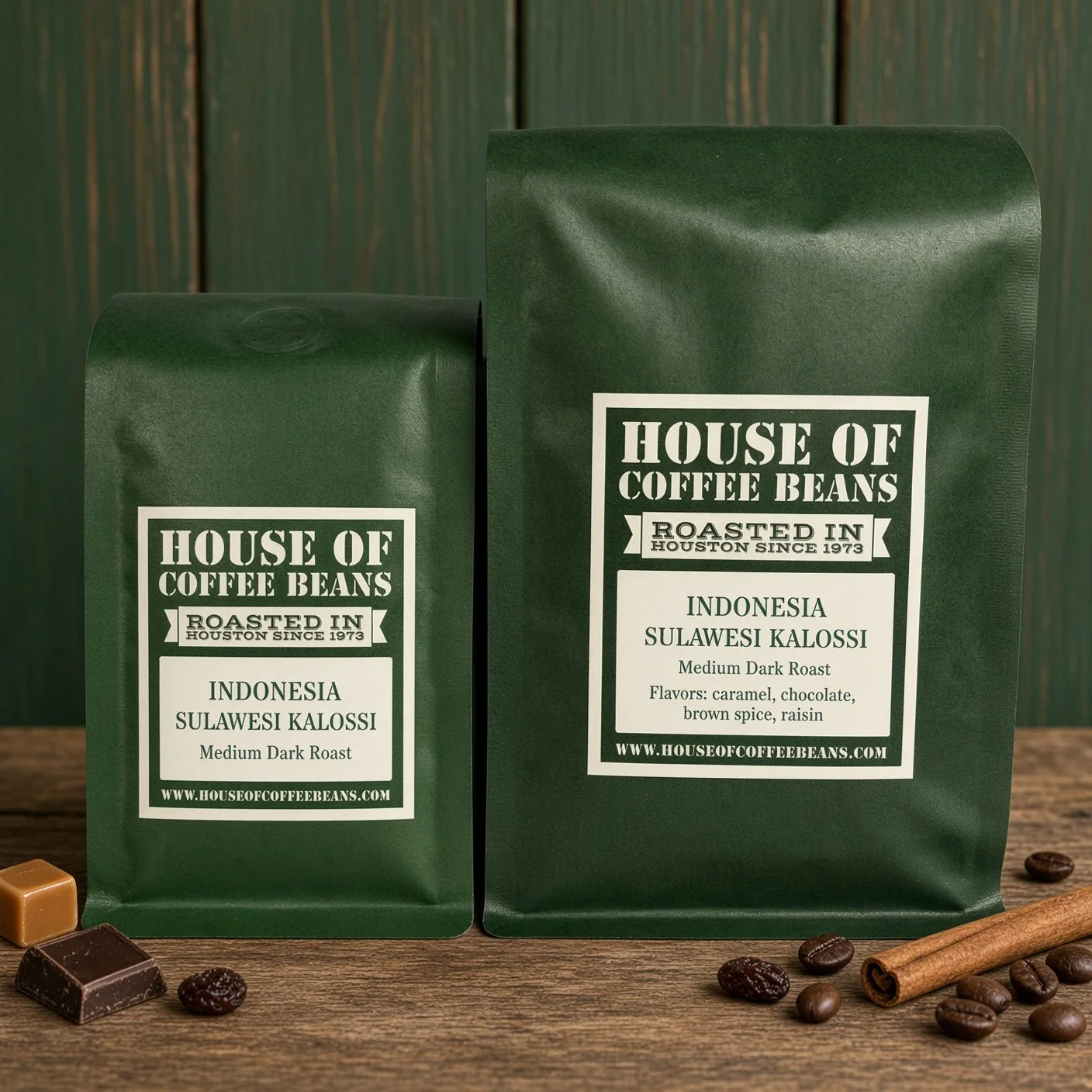
MEDIUM DARK ROAST
AROMA: Chocolate, brown spice
FLAVOR: Caramel, chocolate, brown spice, raisin
AFTERTASTE: Lingering, chocolaty
ACIDITY: Mild
BODY: Rich, creamy, silky
Sulawesi (formerly Celebes), is another of Indonesia’s islands famous for its Arabica coffees. The Island boasts three highland regions producing beautiful Arabicas; Toraja, Kalossi and Mamasa. Kalossi Arabica is produced in the highlands south of Tanah Toraja in the region of Enrekang. The coffee owes its name to the regions capital city Kalossi. The high altitude and volcanic soil is perfect for growing coffee and the yearly production ranges from 5,000 to 10,000 tons. All Kalossi Arabicas are produced with the wet hulling method which is also used in North Sumatra. This produces a coffee known for its rich, earthy body and smooth finish. The bean features delightful berry flavour notes and an exotic aroma and like other Indonesian coffees, Kalossi Arabica has a very low acidity. The majority of the coffee comes from smallholder farmers who each have approximately 1 to 1.5 ha and sell directly to private processors/exporters.
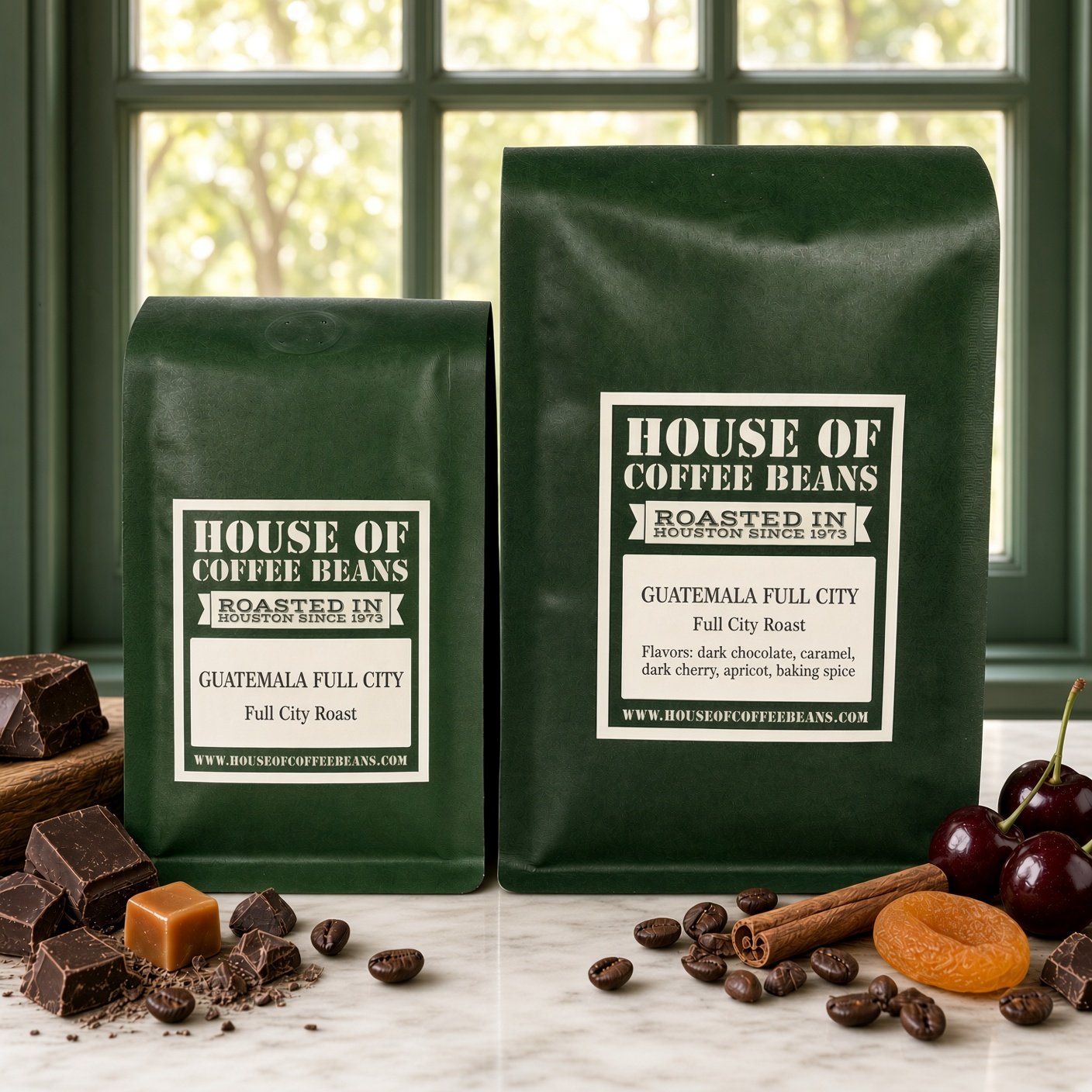
FULL CITY ROAST (Just before second crack)
We leave our Guatemala Huehuetenango in the roaster just a little longer to give this coffee a nice, rich dark color. It's not French Roast dark and oily, but it is slightly darker than our medium roast.
AROMA: Chocolate, caramel
FLAVOR: Dark chocolate, caramel, dark cherry, apricot & subtle baking spice
AFTERTASTE: Rich, winey
ACIDITY: Vibrant, tangy
BODY: Full, rich, smooth
Huehuetenango is the highest and driest of the three non-volcanic coffee regions under cultivation. Thanks to the dry, hot winds that blow into the mountains from Mexico's Tehauntepec plain, the region is protected from frost, allowing Highland Huehue to be cultivated up to 6,500 feet (2,000 meters). The extreme remoteness of Huehuetenango requires all producers to process their own coffee. Fortunately, the region has an almost infinite number of rivers and streams, so a mill can be placed almost anywhere. Zaculeu, named after the pre-Colombian Mayan archeological site
in Huehuetenango, is a blend of fine coffee sourced from a select group of small producers. This coffee is one of the most intensely flavored and fragrant coffees in all of Latin America.
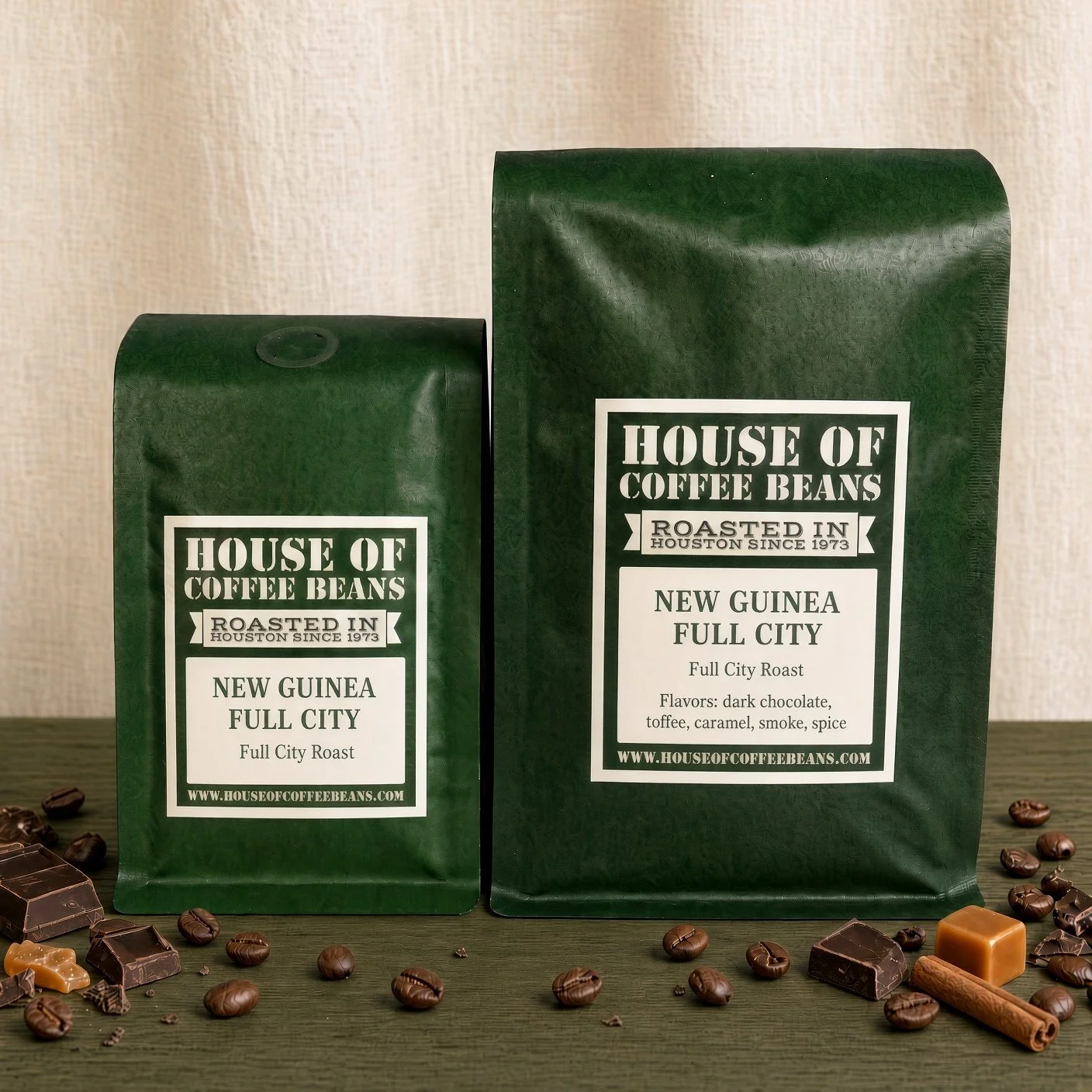
FULL CITY ROAST (Just before second crack)
This delicious, exotic entry is smooth like an Indonesian coffee, winey and complex like an African coffee, and robust like a great South American coffee. It's the United Nations of coffee with a little darker roast, exciting and unusual; Very acidic
PRODUCER INFORMATION:
REGION: Near Mt. Wilhelm
ALTITUDE: 1,525 - 2,125 meters
HARVEST: April - September
AVAILABILITY: June - November
SOIL TYPE: Volcanic Loam
VARIETIES: Typica, Bourbon
COFFEE PROCESSING: Wet Processed
DRYING: Bed Drying - Tarps
CERTIFICATIONS: Fair Trade, Organic
TASTING NOTES:
CUP NOTES: Balanced cup with chocolatey notes. Clean and sweet aftertaste
FLAVOR NOTES: Dark chocolate, toffee, caramel, smoke & spice
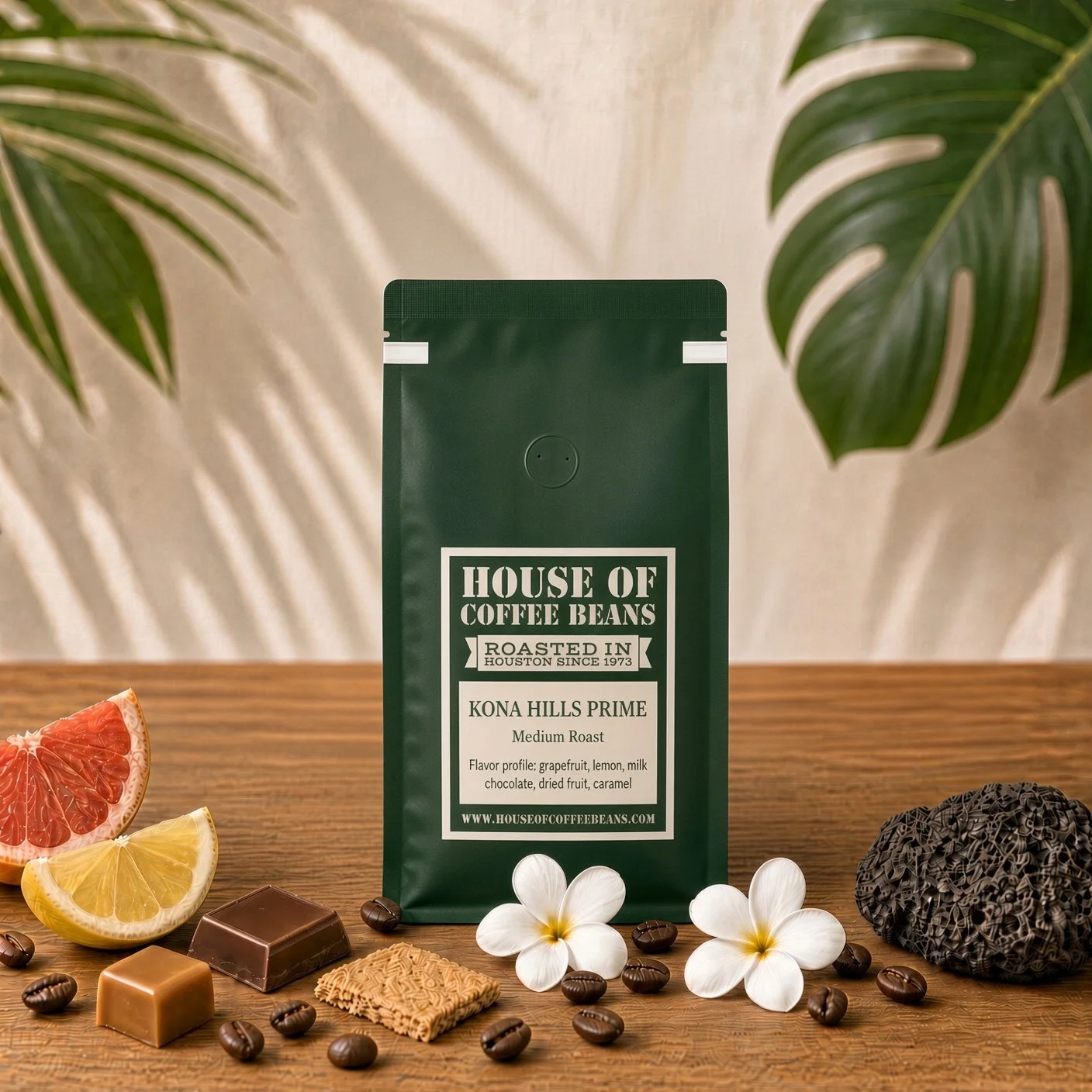
MEDIUM ROAST - 8 oz
Tasting Notes: Grapefruit, Lemon, Milk Chocolate, Dried Fruit, Caramel, Graham
Juicy body, lively acidity.
Grown at an altitude of about 2000 ft, all coffee trees at Kona Hills are 100-yr-old trees. The coffee farm of Kona Hills is located on a small 6-acre estate in the Kona District south of Honanaunau. It has a unique location on the slopes of Mauna Loa, with an altitude of more than 2,000 feet. The volcanic soil provides the coffee trees with rich minerals and nutrients, allowing Kona Hills Coffee to produce excellent quality coffee beans. Since 1986, this family-owned business run by Japanese immigrants and local Hawaiians has adhered to traditional growing and processing methods to maintain the unique flavor of Kona coffee.
Kona Hills Coffee, which specializes in the Kona Typica variety of coffee beans, follows strict grading standards based on the size, shape, weight and defects of the beans. This insistence on quality has resulted in their coffee receiving a score of 92 points in the cupping test. Their coffee exhibits a rich layer of flavors including fruit, floral, nutty, milk chocolate, caramel and a hint of sweetness that combine to provide consumers with a unique tasting experience.
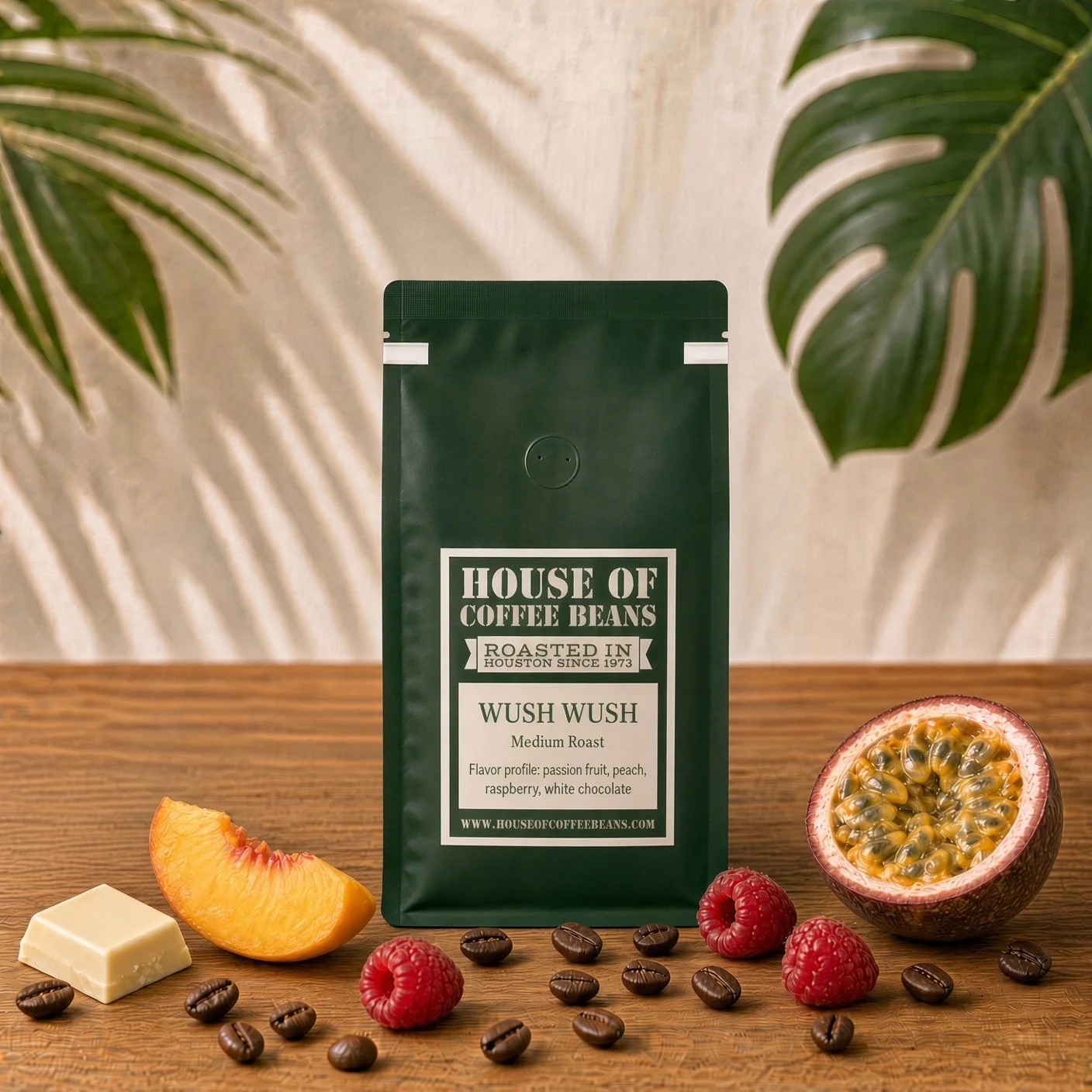
MEDIUM ROAST - 8 oz
Only sold in whole bean format to preserve freshness.
Flavor Profile: Passion fruit, peach, raspberry, white chocolate
Country: Colombia
Region: Huila
Variety: Wush Wush
Harvest Season: 2025
Altitude: 1900 MASL
Process: Anaerobic fermentation / Washed
Drying Process: Parabolic drying bed
Discover our rarest and most exclusive selection of Colombian coffee. This washed Wush Wush, grown in the mountains of Huila, is an extraordinary gem, produced in limited lots and elevated through a slow, precision-controlled anaerobic fermentation. It reveals a symphony of passion fruit, peach, raspberry, white chocolate, and tropical fruits. A masterpiece for palates seeking the rare, the refined, and the unforgettable.
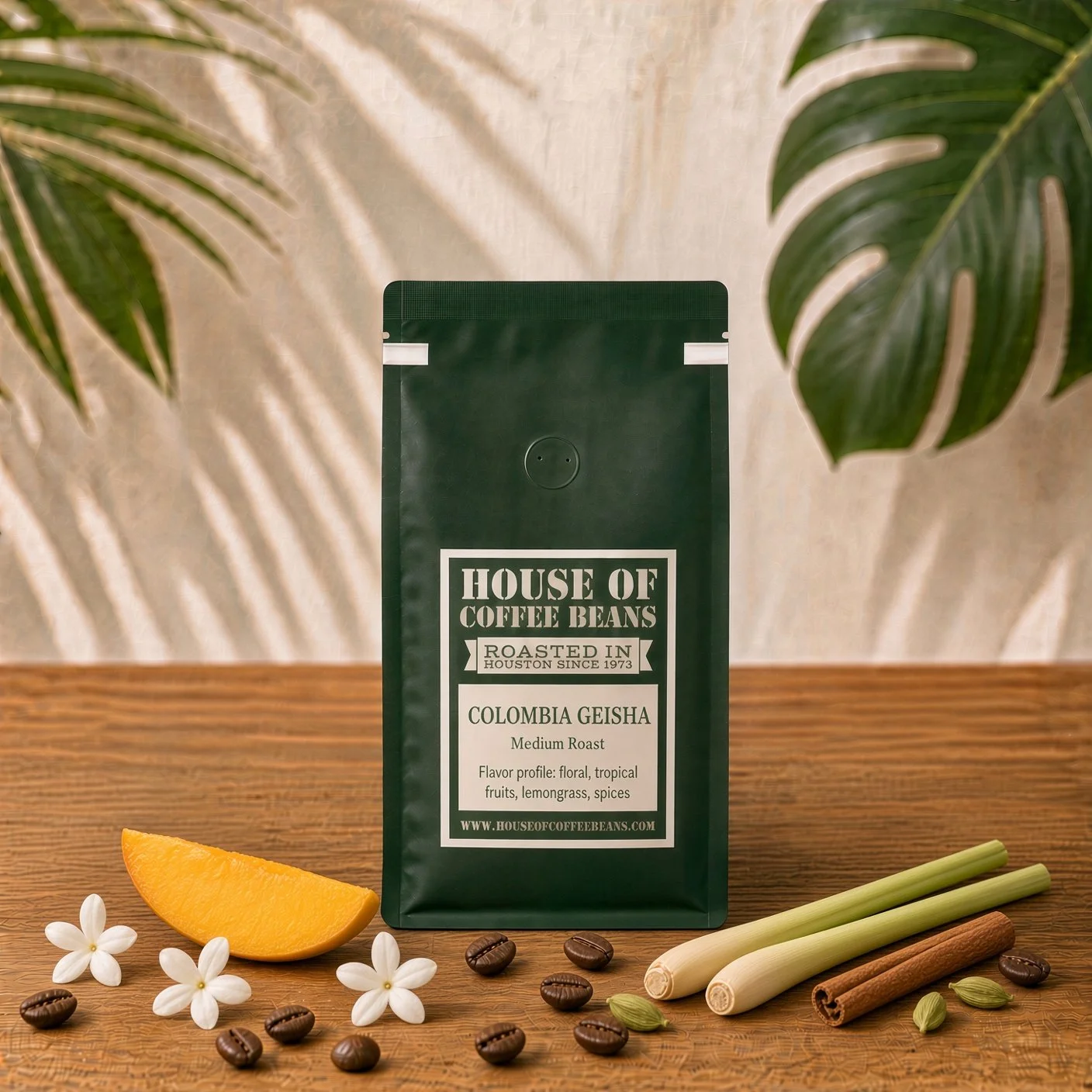
MEDIUM ROAST - 8 oz
Only sold in whole bean format to preserve freshness.
Flavor Profile: Floral, Tropical Fruits, Lemongrass, Spices
Region: Huila
Variety: Geisha
Harvest Season: 2025
Altitude: 1900 MASL
Process: Anaerobic fermentation / Washed
Drying Process: Parabolic drying bed
Discover our rarest and most exclusive selection of Colombian coffee. This Geisha, cultivated in the mountains of Huila, owes its refined character to a slow, meticulously controlled anaerobic fermentation. This complex process unlocks spiced notes, floral undertones, and a vibrant burst of tropical fruits. A true sensory masterpiece, crafted in limited quantities for connoisseurs who seek elegance, depth, and unforgettable distinction in every cup.

LIGHT MEDIUM ROAST
Flavor: Cherry, Tropical Fruit, Hibiscus, Honey, Vanilla, Yuzu
Aroma: Sweet floral chamomile
Body: Medium - Full
Acidity: Mild / Tangy
Process: Natural
Region: Benti Neka Kebele, Hambela Wamena, Guji Zone, Oromia
Altitude: 1900-2300 meters
Producer: Dimtu Tora Wet Mill
Variety: Dega, Kurame, 74110
Organic Guji Dimtu Tora G1 Natural is a vibrant and aromatic coffee sourced from the Dimtu Tora kebele in the Hambela Wamena woreda, located in the Guji zone in Oromia, Ethiopia. This coffee comes to us from Azeb Tadesse and was processed at the Dimtu Tora coffee processing station, a mill established in 2022. The coffee was grown at altitudes ranging from 1900 to 2300 masl, contributing to its complex flavor profile.
Natural Processing
This coffee underwent natural (dry) processing at the Dimtu Tora site. Ripe cherries were hand-sorted and sun-dried on raised beds for roughly two weeks. The beans were dried until they reached a moisture content of 10–12%.
Traceability at Dimtu Tora was ensured through a voucher system tracking cherries from farmers to storage and conditioning bins, maintaining transparency and quality control throughout the process.
About Organic Coffee
This coffee is certified Organic, reflecting sustainable and environmentally conscious farming practices. The farming system integrates shade trees such as Enset, Albizia, Acacia, Militia, and Polyscias, supporting agroforestry and biodiversity. The varieties include Dega, Kurame, and 74110, grown in rich volcanic soil.
The Guji Zone
The Guji zone is renowned for its high-quality coffee and rich cultural heritage. Hambela Wamena, where Dimtu Tora is located, borders Kercha, Gedeo (SNNP), Shakiso, and Uraga woredas. The region's elevation and climate create ideal conditions for coffee cultivation.
Smallholder farmers play a vital role in the coffee supply chain, contributing to the area's reputation for producing exceptional organic coffees.
Quality Grades for Ethiopian Coffee
In Ethiopia, coffee grading is based on both physical and cup qualities, including altitude, imperfections, and flavor. The grades range from 1 (highest) to 9 (lowest), with grades 1 and 2 classified as specialty coffee.